關注、星標公眾號,直達精彩內容
最近部門時刻準備刪庫跑路的小兄弟調試CAN通訊的時候,遇到個MCU死機的問題,而負責這塊代碼的哥們已經跑路好幾年了,而這個設備也已經用了好幾年了,也沒有反饋過什么問題。但是在他那里測試MCU 100%會死機,進入hardfault,一時間CPU都被干燒了,祖傳的代碼這么不靠譜嗎....
最終問題定位在kfifo這部分出了問題,而kfifo是linux kernal里面非常經典的一段代碼,應該不至于吧,對此進行了分析驗證。
釋義摘自:https://blog.csdn.net/linyt/article/details/53355355 ?講解的很詳細,如有侵權,聯系刪除~
kfifo是內核里面的一個First In First Out數據結構,它采用環形循環隊列的數據結構來實現,提供一個無邊界的字節流服務,并且使用并行無鎖編程技術,即當它用于只有一個入隊線程和一個出隊線程的場情時,兩個線程可以并發操作,而不需要任何加鎖行為,就可以保證kfifo的線程安全。
kfifo代碼既然肩負著這么多特性,那我們先一敝它的代碼:
struct?kfifo?{
????unsigned?char?*buffer;????/*?the?buffer?holding?the?data?*/
????unsigned?int?size;????/*?the?size?of?the?allocated?buffer?*/
????unsigned?int?in;????/*?data?is?added?at?offset?(in?%?size)?*/
????unsigned?int?out;????/*?data?is?extracted?from?off.?(out?%?size)?*/
????spinlock_t?*lock;????/*?protects?concurrent?modifications?*/
};
這是kfifo的數據結構,kfifo主要提供了兩個操作,__kfifo_put(入隊操作)和__kfifo_get(出隊操作)。 它的各個數據成員如下:
buffer:?用于存放數據的緩存

size:?buffer空間的大小,在初化時,將它向上擴展成2的冪

lock:?如果使用不能保證任何時間最多只有一個讀線程和寫線程,需要使用該lock實施同步。

in,?out:?和buffer一起構成一個循環隊列。?in指向buffer中隊頭,而且out指向buffer中的隊尾,它的結構如示圖如下:

+--------------------------------------------------------------+
|????????????|<----------data---------->|??????????????????????|
+--------------------------------------------------------------+
?????????????^??????????????????????????^??????????????????????^
?????????????|??????????????????????????|??????????????????????|
????????????out????????????????????????in?????????????????????size
當然,內核開發者使用了一種更好的技術處理了in, out和buffer的關系,我們將在下面進行詳細分析。
kfifo提供如下對外功能規格:
kfifo_alloc 分配kfifo內存和初始化工作
struct?kfifo?*kfifo_alloc(unsigned?int?size,?gfp_t?gfp_mask,?spinlock_t?*lock)
{
????unsigned?char?*buffer;
????struct?kfifo?*ret;

????/*
?????*?round?up?to?the?next?power?of?2,?since?our?'let?the?indices
?????*?wrap'?tachnique?works?only?in?this?case.
?????*/
????if?(size?&?(size?-?1))?{
????????BUG_ON(size?>?0x80000000);
????????size?=?roundup_pow_of_two(size);
????}

????buffer?=?kmalloc(size,?gfp_mask);
????if?(!buffer)
????????return?ERR_PTR(-ENOMEM);

????ret?=?kfifo_init(buffer,?size,?gfp_mask,?lock);

????if?(IS_ERR(ret))
????????kfree(buffer);

????return?ret;
}
這里值得一提的是,kfifo->size的值總是在調用者傳進來的size參數的基礎上向2的冪擴展,這是內核一貫的做法。這樣的好處不言而喻——對kfifo->size取模運算可以轉化為與運算,如下:
kfifo->in?%?kfifo->size?
可以轉化為?
kfifo->in?&?(kfifo->size?–?1)
在kfifo_alloc函數中,使用size & (size – 1)來判斷size 是否為2冪,如果條件為真,則表示size不是2的冪,然后調用roundup_pow_of_two將之向上擴展為2的冪。
這都是常用的技巧,只不過大家沒有將它們結合起來使用而已,下面要分析的__kfifo_put和__kfifo_get則是將kfifo->size的特點發揮到了極致。
__kfifo_put和__kfifo_get巧妙的入隊和出隊
_kfifo_put是入隊操作,它先將數據放入buffer里面,最后才修改in參數;__kfifo_get是出隊操作,它先將數據從buffer中移走,最后才修改out。你會發現in和out兩者各司其職。
下面是__kfifo_put和__kfifo_get的代碼
unsigned?int?__kfifo_put(struct?kfifo?*fifo,
?????????????unsigned?char?*buffer,?unsigned?int?len)
{
????unsigned?int?l;

????len?=?min(len,?fifo->size?-?fifo->in?+?fifo->out);

????/*
?????*?Ensure?that?we?sample?the?fifo->out?index?-before-?we
?????*?start?putting?bytes?into?the?kfifo.
?????*/

????smp_mb();

????/*?first?put?the?data?starting?from?fifo->in?to?buffer?end?*/
????l?=?min(len,?fifo->size?-?(fifo->in?&?(fifo->size?-?1)));
????memcpy(fifo->buffer?+?(fifo->in?&?(fifo->size?-?1)),?buffer,?l);

????/*?then?put?the?rest?(if?any)?at?the?beginning?of?the?buffer?*/
????memcpy(fifo->buffer,?buffer?+?l,?len?-?l);

????/*
?????*?Ensure?that?we?add?the?bytes?to?the?kfifo?-before-
?????*?we?update?the?fifo->in?index.
?????*/

????smp_wmb();

????fifo->in?+=?len;

????return?len;
}
奇怪嗎?代碼完全是線性結構,沒有任何if-else分支來判斷是否有足夠的空間存放數據。內核在這里的代碼非常簡潔,沒有一行多余的代碼。
l?=?min(len,?fifo->size?-?(fifo->in?&?(fifo->size?-?1)));
這個表達式計算當前寫入的空間,換成人可理解的語言就是:
l?=?kfifo可寫空間和預期寫入空間的最小值
使用min宏來代if-else分支
__kfifo_get也應用了同樣技巧,代碼如下:
unsigned?int?__kfifo_get(struct?kfifo?*fifo,
?????????????unsigned?char?*buffer,?unsigned?int?len)
{
????unsigned?int?l;

????len?=?min(len,?fifo->in?-?fifo->out);

????/*
?????*?Ensure?that?we?sample?the?fifo->in?index?-before-?we
?????*?start?removing?bytes?from?the?kfifo.
?????*/

????smp_rmb();

????/*?first?get?the?data?from?fifo->out?until?the?end?of?the?buffer?*/
????l?=?min(len,?fifo->size?-?(fifo->out?&?(fifo->size?-?1)));
????memcpy(buffer,?fifo->buffer?+?(fifo->out?&?(fifo->size?-?1)),?l);

????/*?then?get?the?rest?(if?any)?from?the?beginning?of?the?buffer?*/
????memcpy(buffer?+?l,?fifo->buffer,?len?-?l);

????/*
?????*?Ensure?that?we?remove?the?bytes?from?the?kfifo?-before-
?????*?we?update?the?fifo->out?index.
?????*/

????smp_mb();

????fifo->out?+=?len;

????return?len;
}
原來,kfifo每次入隊或出隊,kfifo->in或kfifo->out只是簡單地kfifo->in/kfifo->out += len,并沒有對kfifo->size 進行取模運算。因此kfifo->in和kfifo->out總是一直增大,直到unsigned in最大值時,又會繞回到0這一起始端。但始終滿足:
kfifo->in?-?kfifo->out?<=?kfifo->size
即使kfifo->in回繞到了0的那一端,這個性質仍然是保持的。
對于給定的kfifo:
數據空間長度為:kfifo->in - kfifo->out
而剩余空間(可寫入空間)長度為:kfifo->size - (kfifo->in - kfifo->out)
盡管kfifo->in和kfofo->out一直超過kfifo->size進行增長,但它對應在kfifo->buffer空間的下標卻是如下:
kfifo->in?%?kfifo->size?(i.e.?kfifo->in?&?(kfifo->size?-?1))

kfifo->out?%?kfifo->size?(i.e.?kfifo->out?&?(kfifo->size?-?1))
往kfifo里面寫一塊數據時,數據空間、寫入空間和kfifo->size的關系如果滿足:
kfifo->in?%?size?+?len?>?size
那就要做寫拆分了,見下圖:
????????????????????????????????????????????????????kfifo_put(寫)空間開始地址
????????????????????????????????????????????????????|
???????????????????????????????????????????????????\_/
????????????????????????????????????????????????????|XXXXXXXXXX
XXXXXXXX|????????????????????????????????????????????????????
+--------------------------------------------------------------+
|????????????????????????|<----------data---------->|??????????|
+--------------------------------------------------------------+
?????????????????????????^??????????????????????????^??????????^
?????????????????????????|??????????????????????????|??????????|
???????????????????????out%size???????????????????in%size?????size
????????^
????????|
??????寫空間結束地址??????????????????????
第一塊當然是: [kfifo->in % kfifo->size, kfifo->size]
第二塊當然是:[0, len - (kfifo->size - kfifo->in % kfifo->size)]
下面是代碼,細細體味吧:
/*?first?put?the?data?starting?from?fifo->in?to?buffer?end?*/???
l?=?min(len,?fifo->size?-?(fifo->in?&?(fifo->size?-?1)));???
memcpy(fifo->buffer?+?(fifo->in?&?(fifo->size?-?1)),?buffer,?l);???

/*?then?put?the?rest?(if?any)?at?the?beginning?of?the?buffer?*/???
memcpy(fifo->buffer,?buffer?+?l,?len?-?l);??
對于kfifo_get過程,也是類似的,請各位自行分析。
kfifo_get和kfifo_put無鎖并發操作
計算機科學家已經證明,當只有一個讀經程和一個寫線程并發操作時,不需要任何額外的鎖,就可以確保是線程安全的,也即kfifo使用了無鎖編程技術,以提高kernel的并發。
kfifo使用in和out兩個指針來描述寫入和讀取游標,對于寫入操作,只更新in指針,而讀取操作,只更新out指針,可謂井水不犯河水,示意圖如下:
???????????????????????????????????????????????|<--寫入-->|
+--------------------------------------------------------------+
|????????????????????????|<----------data----->|???????????????|
+--------------------------------------------------------------+
?????????????????????????|<--讀取-->|
?????????????????????????^?????????????????????^???????????????^
?????????????????????????|?????????????????????|???????????????|
????????????????????????out???????????????????in??????????????size
為了避免讀者看到寫者預計寫入,但實際沒有寫入數據的空間,寫者必須保證以下的寫入順序:
往[kfifo->in,?kfifo->in?+?len]空間寫入數據
更新kfifo->in指針為?kfifo->in?+?len
在操作1完成時,讀者是還沒有看到寫入的信息的,因為kfifo->in沒有變化,認為讀者還沒有開始寫操作,只有更新kfifo->in之后,讀者才能看到。
那么如何保證1必須在2之前完成,秘密就是使用內存屏障:smp_mb(),smp_rmb(), smp_wmb(),來保證對方觀察到的內存操作順序。
上面已經詳細介紹了kfifo的實現原理以及讓人驚嘆的代碼簡潔之道,接下來在MCU工程中實際去應用,看看效果如何。
直接上代碼:
kfifo.h
#ifndef?__KFIFO_H

#define?__KFIFO_H

??

#include?"stdint.h"

#include?"stdlib.h"

#include?"string.h"

#include?"stdio.h"

??

#define?MAX(a,?b)?(((a)?>?(b))???(a)?:?(b))

#define?MIN(a,?b)?(((a)?(b))???(a)?:?(b))

??

#define?is_power_of_2(x)?((x)?!=?0?&&?(((x)?&?((x)-1))?==?0))

??

typedef?struct?{

unsigned?char?*buffer;?/*?the?buffer?holding?the?data*/

unsigned?int?size;?/*?the?size?of?the?allocated?buffer*/

unsigned?int?in;?/*?data?is?added?at?offset?(in?%?size)*/

unsigned?int?out;?/*?data?is?extracted?from?off.?(out?%?size)*/

}?kfifo;

??

/**

*?@brief?CAN?Rx?message?structure?definition

*/

??

#define?CAN_FIFO_SIZE?(2?*?1024)

typedef?struct?{

uint8_t?FifoBuf1[CAN_FIFO_SIZE];

//?uint8_t?FifoBuf2[CAN_FIFO_SIZE];

??

uint8_t?FpStep;

??

}?CAN_STA_TYPE;

??

/*?USER?CODE?BEGIN?Prototypes?*/

typedef?struct?{

uint32_t?StdId;

uint32_t?ExtId;

uint32_t?IDE;

uint32_t?RTR;

uint32_t?DLC;

uint8_t?Data[8];

uint32_t?Timestamp;

uint32_t?FilterMatchIndex;

}?MyCanRxMsgTypeDef;

??

extern?kfifo?gFifoReg1;

extern?kfifo?gFifoReg2;

??

void?kfifo_init(kfifo?*fifo,?unsigned?char?*buffer,?unsigned?int?size);

unsigned?int?kfifo_put(kfifo?*fifo,?unsigned?char?*buffer,?unsigned?int?len);

unsigned?int?kfifo_get(kfifo?*fifo,?unsigned?char?*buffer,?unsigned?int?len);

??

unsigned?int?can_fifo_get(kfifo?*fifo,?unsigned?char?*buffer,?unsigned?int?len);

??

void?kfifo_reset(kfifo?*fifo);

unsigned?int?kfifo_len(kfifo?*fifo);

??

#endif
kfifo.c
#include?"kfifo.h"

kfifo?gFifoReg1;
kfifo?gFifoReg2;

/*
?*?kfifo初始化
*/
void?kfifo_init(kfifo?*fifo,?unsigned?char?*buffer,?unsigned?int?size)
{
????if?(!is_power_of_2(size))
????{
????????return;
????}
????fifo->buffer?=?buffer;
????fifo->size?=?size;
????fifo->in?=?fifo->out?=?0u;
????memset(fifo->buffer,?0,?size);
}

/*
?*?__kfifo_put?-?puts?some?data?into?the?FIFO,?no?locking?version
?*?@fifo:?the?fifo?to?be?used.
?*?@buffer:?the?data?to?be?added.
?*?@len:?the?length?of?the?data?to?be?added.
?*
?*?This?function?copies?at?most?'len'?bytes?from?the?'buffer'?into
?*?the?FIFO?depending?on?the?free?space,?and?returns?the?number?of
?*?bytes?copied.
?*
?*?Note?that?with?only?one?concurrent?reader?and?one?concurrent
?*?writer,?you?don't?need?extra?locking?to?use?these?functions.
?*/

unsigned?int?kfifo_put(kfifo?*fifo,?unsigned?char?*buffer,?unsigned?int?len)
{
????unsigned?int?l?=?0;

????len?=?MIN(len,?fifo->size?-?fifo->in?+?fifo->out);
????/*?first?put?the?data?starting?from?fifo->in?to?buffer?end*/

????l?=?MIN(len,?fifo->size?-?(fifo->in?&?(fifo->size?-?1)));
????memcpy(fifo->buffer?+?(fifo->in?&?(fifo->size?-?1)),?buffer,?l);

????/*?then?put?the?rest?(if?any)?at?the?beginning?of?the?buffer*/

????memcpy(fifo->buffer,?buffer?+?l,?len?-?l);
????
????fifo->in?+=?len;

????return?len;
}

/*
*?__kfifo_get?-?gets?some?data?from?the?FIFO,?no?locking?version
*?@fifo:?the?fifo?to?be?used.
*?@buffer:?where?the?data?must?be?copied.
*?@len:?the?size?of?the?destination?buffer.
*
*?This?function?copies?at?most?'len'?bytes?from?the?FIFO?into?the
*?'buffer'?and?returns?the?number?of?copied?bytes.
*
*?Note?that?with?only?one?concurrent?reader?and?one?concurrent
*?writer,?you?don't?need?extra?locking?to?use?these?functions.
*/
unsigned?int?kfifo_get(kfifo?*fifo,?unsigned?char?*buffer,?unsigned?int?len)
{
????unsigned?int?l?=?0;

????len?=?MIN(len,?fifo->in?-?fifo->out);?

????/*?first?get?the?data?from?fifo->out?until?the?end?of?the?buffer*/
????l?=?MIN(len,?fifo->size?-?(fifo->out?&?(fifo->size?-?1)));
????memcpy(buffer,?fifo->buffer?+?(fifo->out?&?(fifo->size?-?1)),?l);

????/*?then?get?the?rest?(if?any)?from?the?beginning?of?the?buffer*/
????memcpy(buffer?+?l,?fifo->buffer,?len?-?l);

????fifo->out?+=?len;
????return?len;
}

unsigned?int?can_fifo_get(kfifo?*fifo,?unsigned?char?*buffer,?unsigned?int?len)
{
????//__disable_irq();
????
????len?=?kfifo_get(fifo,?buffer,?len);
????
????//__enable_irq();

????return?len;
}

/*
?*?__kfifo_reset?-?removes?the?entire?FIFO?contents,?no?locking?version
?*?@fifo:?the?fifo?to?be?emptied.
?*/
void?kfifo_reset(kfifo?*fifo)
{
????fifo->in?=?fifo->out?=?0;
}

/*
?*?__kfifo_len?-?returns?the?number?of?bytes?available?in?the?FIFO,?no?locking?version
?*?@fifo:?the?fifo?to?be?used.
?*/
unsigned?int?kfifo_len(kfifo?*fifo)
{
????return?fifo->in?-?fifo->out;
}
因為是單線程讀寫,所以沒有進行加鎖操作。
回到問題背景所說的,之前用的時候一直沒問題,現在測試100%把CPU干冒煙,為何會有如此大的差別?
回顧了下測試環境,“跑路的工程師”調試的時候使用的上位機是自定義的數據發送間隔時間,對與kfifo來說,發個間隔時間較大,kfifo進出次數不會差太多,kfifo是“反應的過來”的,實際使用過的時候,上位機替換成了APP,數據發送間隔更大,所以沒有出問題。
現在,“準備刪庫跑路的工程師”,用的是固定間隔的上位機,而且數據發送頻率很高,接收使用的CAN中斷接收,發送的時候是使用的任務輪詢,任務運行周期是100ms,創建的buffer緩沖為2048字節,發送一會兒就會死機,100%復現,增大buffer,不過是死的時間晚了點,雖遲但到~~~
void?can_nbbus_entry(void?*parameter)
{
?nbbus_can_init();
?while?(1)
?{
??nbbus_poll(&nbbus_can,?NB_BUS_BATDIAG_ID);
??rt_thread_mdelay(100);
?}
}
于是對數據幀進行了分析,can接收到的原始數據幀是沒問題的,前面沒出問題的數據一直沒問題,MCU崩潰的時候,CAN接收到的原始數據依然是沒問題的,原始數據既然沒問題,問題應該出在后面解析轉發流程了,分析最終定位在數據幀出現了錯位,CAN數據幀的數據出現了移位,導致can數據長度字節取了一個比較大的數,數據拷貝的時候出現了越界,擦出了內存中的一些數據,進入了hardfault
那么為什么CAN數據幀出現了錯位呢,并且似乎出現在某一固定時刻?
can數據接收數據如下,can的結構體有36字節,每次kfifo_put傳入的len為36字節,剩余空間與36字節進行比較
typedef?struct
{
????uint32_t?StdId;
????uint32_t?ExtId;
????uint32_t?IDE;
????uint32_t?RTR;
????uint32_t?DLC;
????uint8_t?Data[8];
????uint32_t?Timestamp;
????uint32_t?FilterMatchIndex;
}?MyCanRxMsgTypeDef;

void?HAL_CAN_RxFifo1MsgPendingCallback(CAN_HandleTypeDef?*hcan)
{
????HAL_StatusTypeDef?HAL_RetVal;
????if?(hcan?==?&hcan1)
????{
????????HAL_RetVal?=?HAL_CAN_GetRxMessage(hcan,??CAN_RX_FIFO1,?(CAN_RxHeaderTypeDef?*)&gCanRxMsg11,??gCanRxMsg11.Data);
????????if?(?HAL_OK?==?HAL_RetVal)
????????{
????????????kfifo_put(&gFifoReg1,?(uint8_t?*)&gCanRxMsg11,?sizeof(gCanRxMsg11));

????????????__HAL_CAN_ENABLE_IT?(hcan,?CAN_IT_RX_FIFO1_MSG_PENDING);
????????}
????}
}
接下來著重分析下數據是如何產生錯亂的,前面說到定義了2048字節的buffer緩存空間,對存儲空間結構分組如下:
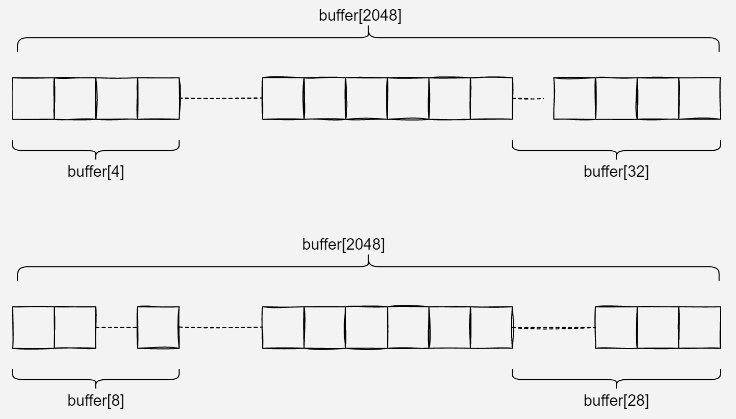
總共2048字節緩存空間,可以劃分為36*56 = 2016 + 32 = 2048,也就意味著最后一幀數據32字節存儲在尾端32字節空間,剩余4字節存儲在隊列頭部4字節空間
那么一個循環之后,后面剩余2048-4=2044字節,可以劃分為36*56 = 2016 + 28 = 2044字節,同理循環之后,最后一幀數據28字節存儲在隊列尾部28字節空間,8字節數據存儲在隊列頭部8字節空間
如此循環往復,不再贅述.......
然后軟件層面進行了模擬測試 測試代碼如下:
CAN_STA_TYPE?gCanStaReg?=?{0};
MyCanRxMsgTypeDef?gCanTempMsg?=?{0};
MyCanRxMsgTypeDef?gCanRxMsg20?=?{0};

int?main()?{
?uint16_t?fifo_len?=?0;
?MyCanRxMsgTypeDef?gCanRxMsg10?=?{
??0,?0x01B0AABF,?0x56,?0x78,?0x8,?{1,?2,?3,?4,?5,?6,?7,?8},?0x77,?0x44};

?kfifo_init(&gFifoReg1,?gCanStaReg.FifoBuf1,?CAN_FIFO_SIZE);
?int?i?=?0,?j?=?0;
?while?(1)?{
??i++;
??if?(i?%?5?==?0)?{
???kfifo_put(&gFifoReg1,?(uint8_t?*)&gCanRxMsg10,?sizeof(gCanRxMsg10));
?}
?j++;
?if?(j?%?10?==?0)?{
??if?((fifo_len?=?kfifo_len(&gFifoReg1))?>=?sizeof(gCanTempMsg))?{
??can_fifo_get(&gFifoReg1,?(uint8_t?*)&gCanTempMsg,?sizeof(gCanTempMsg));
??printf("stdid?=?%04x\n",?gCanTempMsg.StdId);
??printf("exdid?=?%04x\n",?gCanTempMsg.ExtId);
??printf("ide?=?%04x\n",?gCanTempMsg.IDE);
??printf("rtr?=?%04x\n",?gCanTempMsg.RTR);
??printf("DLC?=?%04x\n",?gCanTempMsg.DLC);
??printf("data:\n");
??for?(int?i?=?0;?i?8;?i++)?{
???printf("%02x?",?gCanTempMsg.Data[i]);
??}
??printf("Timestamp?=?%04x\n",?gCanTempMsg.Timestamp);
??printf("FilterMatchIndex?=?%04x\n\n\n\n",?gCanTempMsg.FilterMatchIndex);
?}
?printf("in_index?=?%d,out_index?=?%d,index_diff?=?%d\n",?gFifoReg1.in,
?gFifoReg1.out,?gFifoReg1.in?-?gFifoReg1.out);
?printf("-----arr----\n\n");
?for?(i?=?0;?i?2048;?i++)?{
??if?(i?%?36?==?0)?{
???printf("%d?\n",i/36);
??}
??printf("%02x?",?gFifoReg1.buffer[i]);
?}
?printf("\n\n");
?if?(gCanTempMsg.DLC?>?8)?{
??printf("-----error----\n\n");
??printf("in_index?=?%d,out_index?=?%d,index_diff?=?%d\n",?gFifoReg1.in,
??gFifoReg1.out,?gFifoReg1.in?-?gFifoReg1.out);
??return?0;
?}
}
?Sleep(10);
}
?return?0;
}
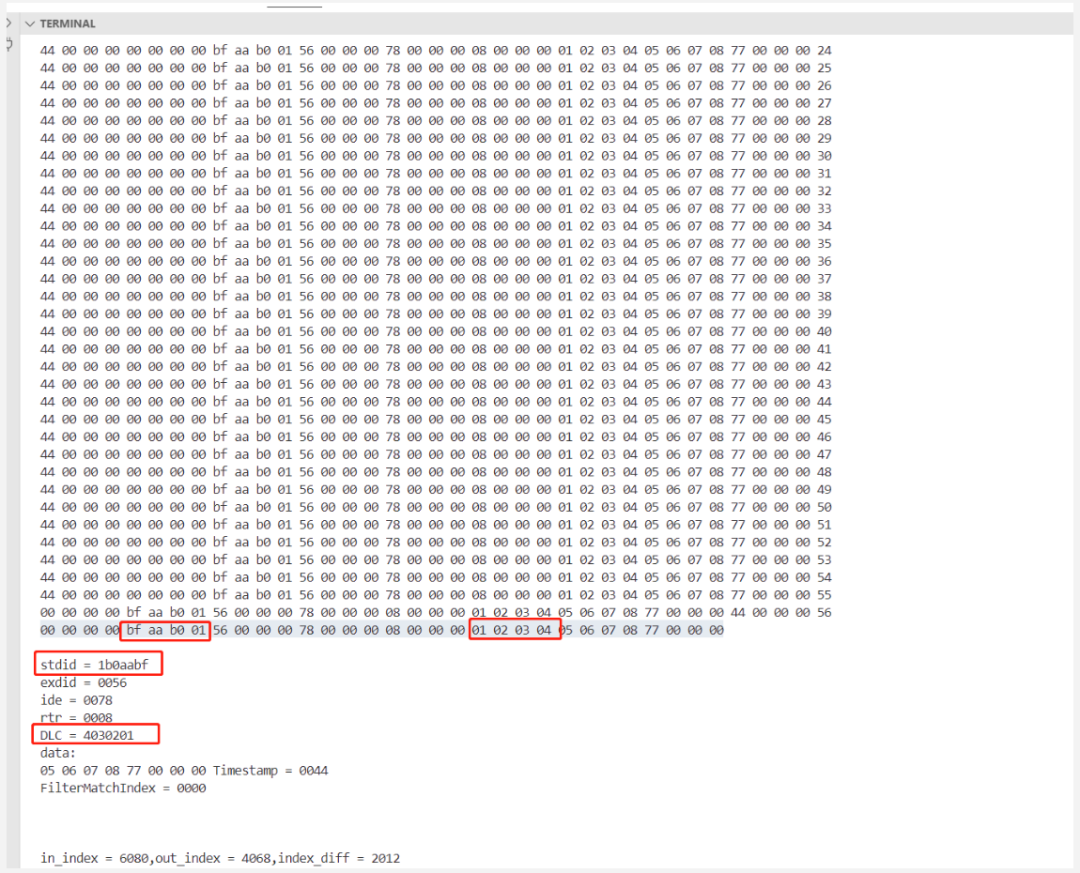
使用上面的測試代碼復現了問題,出現了數據的錯位,相差4個字節,本來應該是長度的字節,被數據區四字節給填充了,導致數據長度異常變大,數據copy過程中覆蓋了部分ram空間,導致程序崩潰
出現上面問題的核心原因是數據放的速度遠大于取得速度,導致數據存儲扣圈出現錯位,這種用法可能背離了kfifo原本的設計使用場景,導致出現問題。
這個方法最簡單,只需要調整kfifo_get的調用周期即可,結合kfifo_put的調用周期,保持在不高于kfifo_put的調用周期應該都是可以的,實測改為了10ms取數據之后,不再出現數據異常,MCU進入hardfault的問題。
上面提到數據取得慢了,出現了扣圈的情況,數據存儲與讀取出現了“內存錯位”,那我們可以從空間剩余的情況考慮,假設剩余空間不足以放下一幀數據,等一等取數據的指針。
代碼優化,增加忙判斷,空間不足,認為是忙,但這種情況可能會導致一些數據幀的丟失,響應滯后,對于實時性特別高的場景可能不太適用,實際測試也不會出現數據內存錯位。
boolean?is_busy(kfifo?*fifo,?uint8_t?len)?{
?if?((fifo->in?-?fifo->out)???return?TRUE;
}
?return?FALSE;
}
int?main()?{
?uint16_t?fifo_len?=?0;
?MyCanRxMsgTypeDef?gCanRxMsg10?=?{
??0,?0x01B0AABF,?0x56,?0x78,?0x8,?{1,?2,?3,?4,?5,?6,?7,?8},?0x77,?0x44};
?kfifo_init(&gFifoReg1,?gCanStaReg.FifoBuf1,?CAN_FIFO_SIZE);
?int?i?=?0,?j?=?0;
?while?(1)?{
??i++;
??if?((i?%?5?==?0)?&&?is_busy(&gFifoReg1,?sizeof(gCanRxMsg10)))?{
??kfifo_put(&gFifoReg1,?(uint8_t?*)&gCanRxMsg10,?sizeof(gCanRxMsg10));
?}
?j++;

?if?(j?%?10?==?0)?{
?if?((fifo_len?=?kfifo_len(&gFifoReg1))?>=?sizeof(gCanTempMsg))?{
??can_fifo_get(&gFifoReg1,?(uint8_t?*)&gCanTempMsg,?sizeof(gCanTempMsg));
??printf("stdid?=?%04x\n",?gCanTempMsg.StdId);
??printf("exdid?=?%04x\n",?gCanTempMsg.ExtId);
??printf("ide?=?%04x\n",?gCanTempMsg.IDE);
??printf("rtr?=?%04x\n",?gCanTempMsg.RTR);
??printf("DLC?=?%04x\n",?gCanTempMsg.DLC);
??printf("data:\n");
??for?(int?i?=?0;?i?8;?i++)?{
???printf("%02x?",?gCanTempMsg.Data[i]);
??}
?printf("Timestamp?=?%04x\n",?gCanTempMsg.Timestamp);
?printf("FilterMatchIndex?=?%04x\n\n\n\n",?gCanTempMsg.FilterMatchIndex);
}
?printf("in_index?=?%d,out_index?=?%d,index_diff?=?%d\n",?gFifoReg1.in,

?gFifoReg1.out,?gFifoReg1.in?-?gFifoReg1.out);

?//?printf("-----arr----\n\n");
?//?for?(i?=?0;?i?
?//?if?(i?%?36?==?0)?{
?//?printf("%d?\n",i/36);
?//?}
?//?printf("%02x?",?gFifoReg1.buffer[i]);
?//?}
?//?printf("\n\n");
?if?(gCanTempMsg.DLC?>?8)?{
??printf("-----error----\n\n");
??printf("in_index?=?%d,out_index?=?%d,index_diff?=?%d\n",?gFifoReg1.in,
??gFifoReg1.out,?gFifoReg1.in?-?gFifoReg1.out);
??return?0;
?}
}
?Sleep(10);
}
?return?0;
}
綜上所述,為了保證數據的實時性要求,存儲和讀取的周期配合尤為重要,為最優解,實時性要求不高的,可以考慮增加忙判斷的方式。
問題解決掉,刪庫跑路的小哥暫時不用跑了,又可以一塊愉快的寫代碼了~
歡迎關注公眾號“小飛哥玩嵌入式”,一起解鎖更多的嵌入式開發技能。